Lower VRT on ECO friendly cars
CompleteCar.ie’s Paddy Comyn and Shane O’ Donoghue are calling for the addition of an Eco VRT (Vehicle Registration Tax) rate of 10% and the removal of road tax on newer, lower-emission vehicles for a period of two years. They claim the existing VRT and motor tax band system fails to offer an incentive to buyers of new petrol or diesel cars with emissions of less than 100g/km.
Car manufacturers are being forced to lower their average emissions to an EU level and in some cases this has lead to newer models with ultra low emissions. In a lot of cases, the technology that allows these cars to be so frugal isn’t cheap and they can end up costing more than models with higher emissions.
Newer eco-friendly models, such as the Fiat 500 TwinAir, Audi A3 TDI, MINI Cooper Diesel, Opel Corsa EcoFlex and Volkswagen Golf BlueMotion, now come with emissions of less than 100g/km yet are taxed in the same way as higher emitting versions.
A new VRT band would also encourage buyers to keep buying standard hybrid cars such as the Toyota Prius which loses its €2,500 VRT refund at the end of 2010 yet has emissions of just 89g/km.
Vehicle Registration Tax is a significant revenue generator for central government and is chargeable on registration of a motor vehicle in the State. A vehicle must be registered before it can be licensed for road tax purposes. A vehicle brought into Ireland from abroad must pay VRT by the end of the next working day following its arrival in the State. A completed declaration form together with the vehicle should be presented at any of the 23 Vehicle Registration Offices VRO
Some critics of VRT claim that it is effectively a continuation of excise duty (which was applicable to vehicles in Ireland prior to 1992) and as such is illegal under European union law. It should also be noted that VRT is calculated on the selling price of a vehicle which is in effect a double taxation.
VRT take was down €700 million in 2009 when compared to 2008. A mere €375 million was taken in 2009. There was €328.6 million taken in January 2008 alone. The majority of the fall is due to the 66% drop in new registrations (Cartell.ie was first to identify the sales slump). However, there was a massive shift towards low emitting CO2 vehicles as part of the new 7 band VRT rate system and this would have further reduced the take. Seventy seven percent of new cars sold so far in 2010 are from tax Band A and B which are the lower VRT rate At the start of the year SIMI predicted that with the assistance of the scrappage scheme, 70,000 new cars would be sold for the entire year. The numbers sold have surpassed this target already in 2010, and this should see VRT receipts increase and swell the coffers somewhat. None the less, the VRT take for 2009/2010 goes to central government and it doesn’t look enough to run the Department of Transports costs of €530 million. Therefore there will be no additional cash available for the exchequer contribution to the local authorities.
All passenger (category A) vehicles must have approved documentation confirming the level of CO2 emissions of the vehicle being registered. Without these registration documents (e.g. Sections 1- 8 of the V5C from the UK) it is not possible for Revenue to register your vehicle.
The registration certificate, issued by the Department of Transport , will be posted to you after you have applied to your local authority motor tax office for your road tax license.
There are various reliefs and exemptions from VRT:
- transfer of residence
- transfer of business activity
- inheritance.
- disability
VRT is calculated as a percentage of the Open Market Selling Price (OMSP) of the vehicle. The OMSP is the “expected retail price” and includes all taxes (Including VAT) previously paid in the state.
VRT Rates pre-July 2008
| Vehicle | Engine Size | VRT |
| Cat. A: Cars | < 1400 cc | 22.5% of OMSP, (subject to a min. tax of €315) |
| Cat. A: Cars | 1401-1900cc | 25% of OMSP (subject to a min. tax of €315) |
| Cat. A: Cars | > 1900cc | 30% of OMSP (subject to a min. tax of €315) |
| Cat. B: Car Based Commercial Vehicles | N/A | 13.3% of OMSP (subject to a min tax of €125) |
| Cat. C: Commercial Vehicles | N/A | A flat rate of €50. |
| Cat. D: Emergency and Construction Vehicles | N/A | N/A |
| Hybrid Vehicles | as per cars | 50% of VRT payable may be rebated in respect of some hybrid vehicles. |
Current VRT Rates
A new system was introduced with effect from the 1st July 2008. This system moved the VRT calculation for passenger vehicles from being calculated on engine capacity to a system calculated on CO2 Emissions. This system applies to new vehicles registered from this date as well as second hand vehicles imported after this date. Commercial Vehicles remain unaffected.
| Band | CO2 Emissions | VRT Rate |
| A | 0 – 120g | 14% of OMSP |
| B | 121 – 140g | 16% of OMSP |
| C | 141 – 155g | 20% of OMSP |
| D | 156 – 170g | 24% of OMSP |
| E | 171 – 190g | 28% of OMSP |
| F | 191 – 225g | 32% of OMSP |
| G | 226g and over | 36% of OMSP |
In addition, Motor Tax Rates have been realigned to reflect these new VRT bands with the motor tax payable being linked to the VRT band.
VRT Category A
Examples of Category A vehicles include cars (saloons, estates, hatchbacks, convertibles, coupes, MPVs, Jeeps etc.) and minibuses with less than 12 permanently fitted seats (11 passenger seats plus the driver’s seat).
VRT Category B
Examples of Category B vehicles include certain car derived vans and jeep derived vans.
The rate of VRT applicable to Category B vehicles, subject to a minimum VRT of €125, is 13.3% of the Open Market Selling Price (OMSP).
VRT Category C
Examples of Category C vehicles include certain commercial vehicles, agricultural tractors and buses with at least 13 permanently fitted seats (12 passenger seats plus the driver’s seat), motor caravans which have an unladen weight of more than .3,000 kilograms.
The VRT rate applicable to Category C vehicles is a flat rate of €50.
VRT Category D
Examples of Category D vehicles include ambulances, fire engines, vehicles used in the transportation of road construction machinery. The use to which a vehicle is put is also considered when a vehicle is being classified for VRT purposes as Category D.
There is no VRT payable on a Category D vehicle.
Motor – cycles
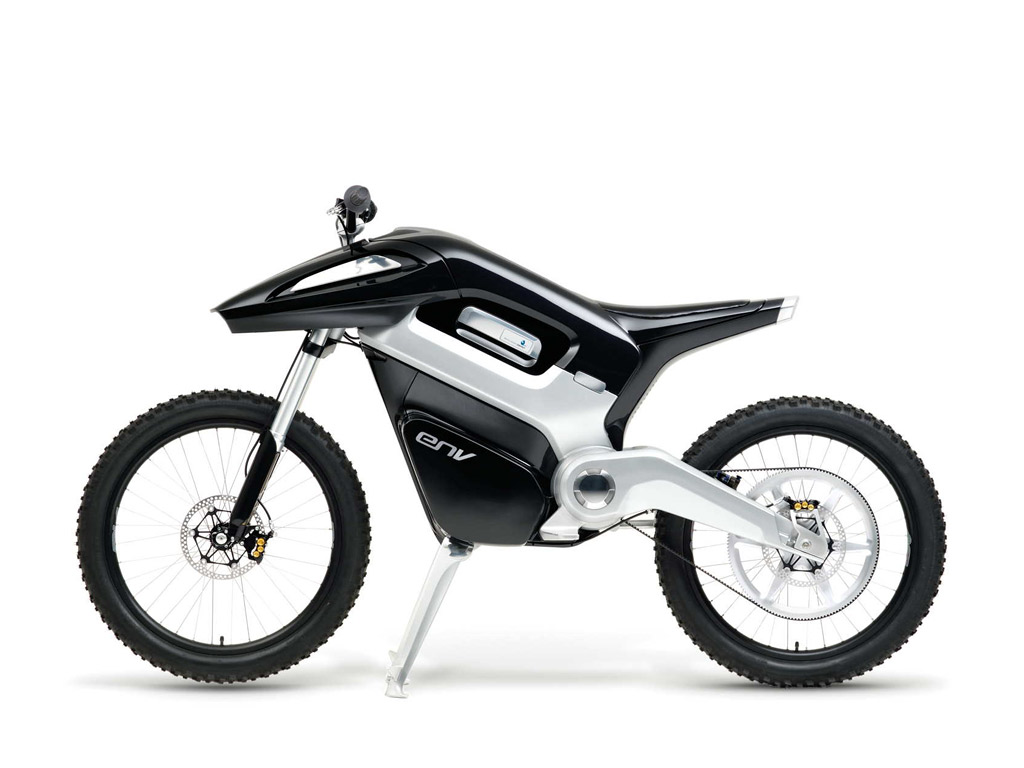
Examples include motor – cycles, scooters, certain All Terrain Vehicles (ATV).
VRT is charged by reference to the cubic capacity i.e. cubic centimetres (cc) of the engine. The current rates are €2 in respect of each cc up to 350 and €1 for each cc thereafter. The total amount is then reduced by prescribed percentages in accordance with the following table to take account of the age of the vehicle.
| Reduction in VRT when age is taken into account | |
| Age | VRT Reduction |
| > 3 months and < or equal to 1 year | 10% |
| > 1 year and < or equal to 2 years | 20% |
| > 2 years and < or equal to 3 years | 40% |
| > 3 years and < or equal to4 years | 50% |
| > 4 years and < or equal to 5 years | 60% |
| > 5 years and < or equal to 7 years | 70% |
| > 7 years and < or equal to 10 years | 80% |
| > 10 years and < or equal to 30 years | 90% |
| > 30 years | 100% |
There is no VRT payable on an electric motor – cycle.
Repayment/Remission of VRT on Hybrid Electric Vehicles and Flexible fuel vehicle.
Hybrid electric vehicles and flexible fuel vehicles may qualify for a remission/repayment of up to a maximum of €2,500. The vehicles must be series production vehicles. The repayment/remission is on a sliding scale depending on the age of the car (See Table below). This provision is available from 1 July 2008 to 31 December 2010:
| Maximum amount which may be remitted or repaid depending on the age of the vehicle | |
| Age of vehicle | Maximum amount which may be remitted or repaid |
| New vehicle, first registration | €2,500 |
| Not a new vehicle but less than 2 years | €2,250 |
| 2 years or over but less than 3 years | €2,000 |
| 3 years or over but less than 4 years | €1,750 |
| 4 years or over but less than 5 years | €1,500 |
| 5 years or over but less than 6 years | €1,250 |
| 6 years or over but less than 7 years | €1,000 |
| 7 years or over but less than 8 years | €750 |
| 8 years or over but less than 9 years | €500 |
| 9 years or over but less than 10 years | €250 |
| 10 years or over | Nil |
‘hybrid electric vehicle’ means a vehicle that derives its motor power from a combination of an internal combustion engine and an electric motor and is capable of being driven on electric propulsion alone for a material part of its normal driving cycle.
‘flexible fuel vehicle’ means a vehicle that derives its motive power from an internal combustion engine that is capable of using a blend of ethanol and petrol, where such blend contains a minimum of 85 per cent ethanol.
Electric Vehicles including Electric Motorcycles
Category A and B vehicles and motorcycles which are shown to the satisfaction of the Revenue Commissioners to be series production models of electric vehicles and electric motorcycles are exempt from VRT until 31 December 2010.
stanley bytheway says:
Sir /madam
My wife is wheelchair bound , would the abolition of vrt bring the price of cars down i dont think so.
No one seems to care about the disabled , the dealers are trying to rip us off on tax benifits nd the goverment are cutting our benifits.
Try to get to hospital without a car if you cant walk its a joke.
The WCA are trying there best but to no avail.
Sick to the teeth regards stan