Car dashboard symbols and warning lights
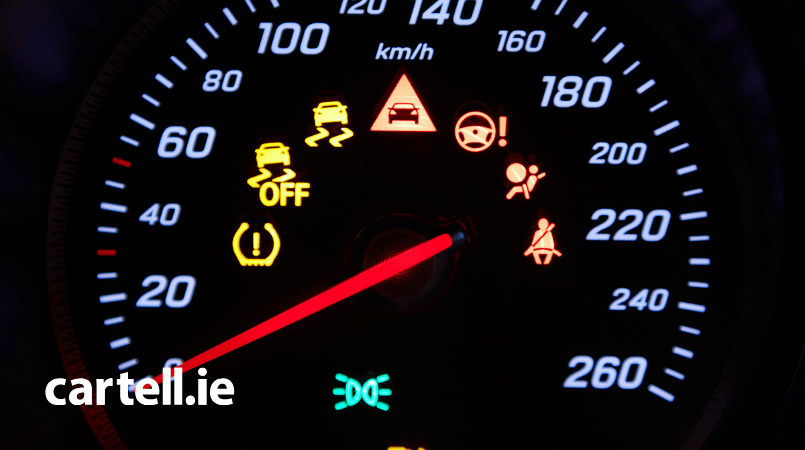
As modern cars become ever more complex, with increasing amounts of electronic gizmos fitted to vehicles, some of the symbols and warning lights which might flash up in your dashboard might not be immediately familiar to you.
To that end, we’ve done a guide of the most common warnings you might seen in the instrument cluster of your car.
And also, remember the colour-coding system manufacturers adhere to: if the light is green, blue or white, it’s normally not a fault warning but an operational illumination for some software system; if the light is yellow, it’s a warning there’s a minor fault, some technology is deactivated, or a safety system is in operation; and if the light is red, it’s likely to be a major fault and it will need professional attention as soon as is reasonably possible.
Colour code at a glance
- Green, blue or white usually means a system is active or providing information.
- Yellow or amber usually means a warning, minor fault, or unavailable assistance feature.
- Red usually means stop, investigate, and get professional help as soon as it is safe.
Adblue Warning Light

Specifically only for those of us with more modern diesel cars, which have selective catalytic reduction (SCR). If fitted with this system to clean up exhaust gases, AdBlue is essential to the clean running of the powertrain. Therefore, you need to keep AdBlue topped up. Luckily, most manufacturers will include a symbol with about 1,600km of warning before the AdBlue tank is completely emptied – giving you plenty of time to buy some AdBlue, either from a motor factors or, more commonly, a fuel station, and then top the tank up.
Autonomous Emergency Braking (Aeb) Triggered/Fault

AEB has multiple different names from car brand to car brand, but it has been a Euro NCAP safety prerequisite for many years now that this tech is fitted to new vehicles as standard. This symbol shows you one of two things: the first is that the AEB isn’t working, either because there’s a fault with the system itself, in which case you need to have it checked out by a specialist, or because you have knowingly deactivated it (there’s usually a physical button on the car’s dashboard or fascias, or an icon to tap on the main infotainment touchscreen that will switch AEB on or off), in which case you need to turn it back on to extinguish the ‘warning’; or, alternatively, it can sometimes flash rapidly and briefly if the AEB actually kicks into action and stops your car from running into an obstacle or other vehicle.
Airbag Warning Light

An oldie now, as airbags have been an industry-wide standard fitment in European cars since the late 1990s. They are a key factor in mitigating occupant injuries in the event an accident takes place, so this little emblem glowing in the dash is not good news – as it’ll likely mean the airbags will not deploy in the event of an accident.
Battery Warning Light
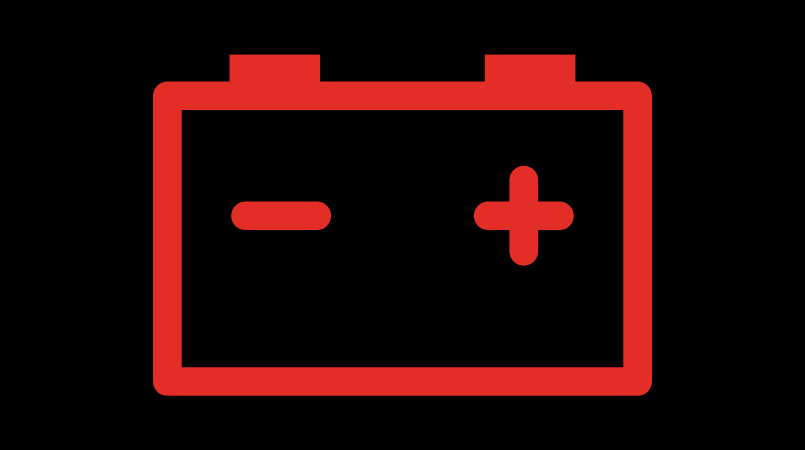
With more and more EVs now in general circulation, some confusion can arise about the main propulsion battery (the huge battery pack that gives energy to the electric motor driving the car) and the 12-volt battery system. The latter is just like a 12-volt power system onboard a car with an engine, in that it powers all the ancillary electrics in an EV – things like the lights, the radio, the cabin heating and cooling system, the wipers and so on. And, in the way an ICE (Internal Combustion Engined) car would use its engine plus an alternator to keep its 12-volt battery topped up, in an EV some of the energy from the main battery is diverted to keep the ancillary battery in good condition. Therefore, the logo above relates to a problem specifically with your 12-volt battery system in any type of car and indicates that the battery needs attention or replacement. In almost all cars, this light will illuminate as soon as you power it up, but it should extinguish after a few seconds – and it should definitely be ‘out’ (i.e., not lit up) if you’re driving. This is one you cannot ignore, because if the battery fails on the move, you will lose various powered systems, so get the battery checked out ASAP if you see this light burning constantly.
Brakes Warning Light

Often seen as either a red or yellow symbol, it might have an exclamation mark in the middle or alternatively the letters ‘ABS’, or even a representation of someone’s lower leg and foot pressing the brake. Also, it can be framed by solid brackets or three curved dashes on either side, but whatever combination of graphics you have, this icon means there’s a fault with your car’s brakes. As soon as you see this, you should slow down to a very low speed and head to the nearest garage immediately, to find out what is wrong.
Coolant Warning Light

This one does not apply to EVs, only to ICE cars. Combustion engines need cooling when they run, and on almost all vehicles except a handful of rare exceptions, this is handled by a water-fed system. A mix of antifreeze and distilled water, your coolant levels can drop as the car operates, so this symbol mainly means you need to top the coolant back up to optimal levels again. It can also mean there’s a fault with the cooling system for the engine, though, so for that reason (and because you don’t just want to be lazy and ignore the light if all it’s asking is for you to top up the coolant before it gets too low) you should check this out straight away. Even a fault with the car’s cooling system will be as nothing to the cost of an entire new engine, if your existing one gets too hot while running and fatally cooks itself…
Particulate Filter Clogged/Faulty
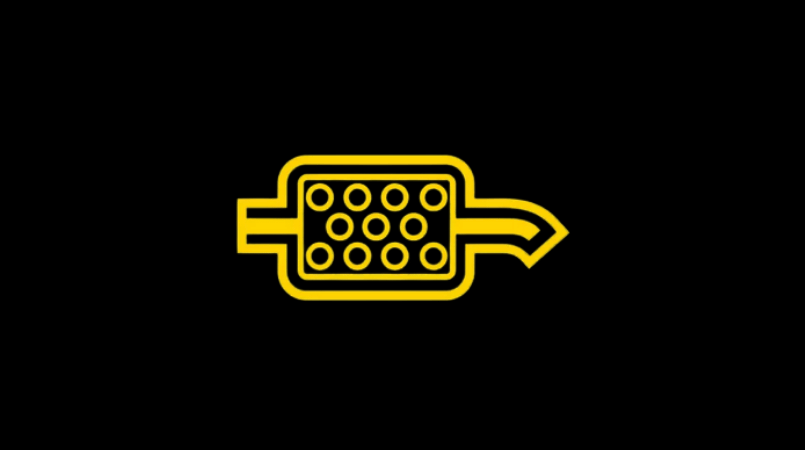
Predominantly, this logo used to be for turbodiesel cars and their diesel particulate filters, but the increasing use of the related gasoline particulate filters (GPFs) in more modern petrol cars means you might see this in a non-diesel vehicle, although it’s much rarer that the GPFs have a problem. Either way, it means the filter is clogged – lots of short-use, low-speed journeys will do this quicker than if you run the car regularly for longer distances at higher speeds, allowing the engine and exhaust to get up to their optimal operating temperatures. A clogged DPF or GPF won’t be terminal to the car’s operation, but it might start running rough or delivering less power than you’d expect. Professional ‘cleaning’ of a DPF or GPF may cost something fairly reasonable, but if the filter needs complete replacement, then it can get substantially dearer, so don’t ignore this light if you see it.
Door/Bonnet/Boot Open Warning
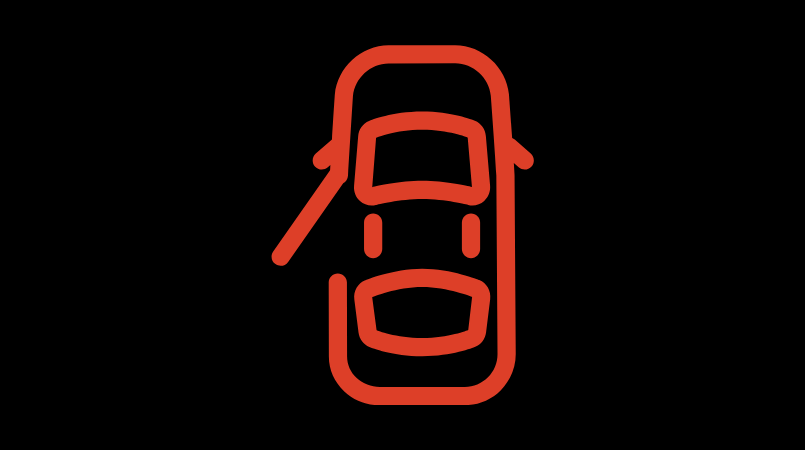
These emblems mean one of the car’s main apertures – the doors into the passenger compartment, the boot lid/tailgate, or the bonnet – are not properly closed. The simple remedy is to stop the car, get out and then close which offending item is not fully secured. Modern vehicles tend to have specific and clear graphical displays which will tell you precisely which door is open, rather than just a generic symbol.
Driver Alert Warning

With slight variances in appearance, a little steaming coffee cup symbol is not the car suggesting you stop for a hot drink and a bit of a gossip, but in fact that the vehicle’s driver-monitoring systems (steering inputs measured, visual recognition of the driver’s face and so on) suspect that you might be tired or fatigued. It will either pop up because you are driving erratically, weaving in your lane or failing to evenly control your speed, or because you’ve been driving for a long time – so don’t be offended if you think you’re at the top of your game and it appears, as it might simply be on a timer and you have (for example) exceeded three hours straight at the wheel.
Engine Warning/Management Light
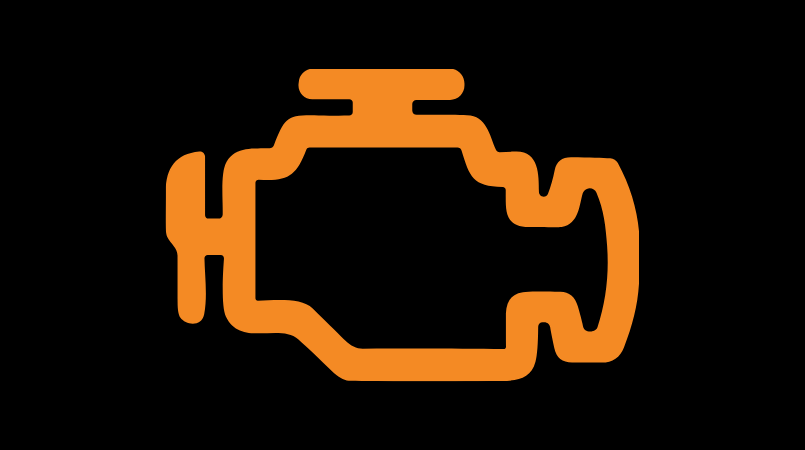
One of the biggies here, but it annoyingly pops up far more regularly than it really should. This is the engine warning light, sometimes called the ‘engine management light’ or EML for short, and it indicates something is wrong in the single most important item of any car – the engine. The thing is, your engine failing is not only expensive but, usually, it comes to the detriment of completing your current journey, so the EML can be a bit over-eager to show its face; think of it as the manufacturers adopting a belt-and-braces approach to build in a bit of protective leeway. If the EML is yellow and the car appears to be driving fine, then you’re probably not in any danger of breaking down or the engine blowing up – it could just be a minor sensor fault or similar. However, ignoring the yellow EML in the long term, or indeed missing the fact that it’s actually glowing red rather than yellow, could lead to very serious and expensive failures with your drivetrain. As annoying as it can be to take the car into a garage and then find out the EML was just a failsafe light for a very minor error, you should always take your car to be inspected by a professional once you see the EML in any colour. Failing to adhere to this rule could see you looking at a repair bill running to the thousands of euro if you’re not careful…
Fuel Warning Light
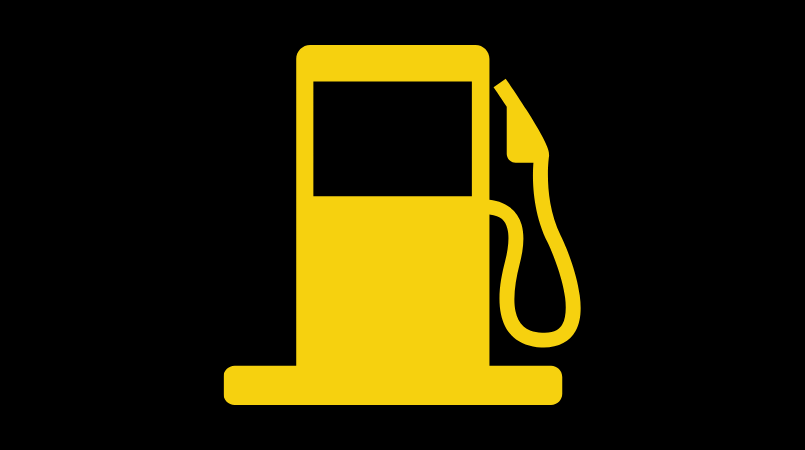
This is the low fuel symbol, which means your petrol, diesel, HEV or PHEV is nearly out of whichever of the two main fossil-fuel sources it runs on, and it always glows yellow (never red). Therefore, when you see it, head to your nearest fuel station and then make sure you fill up with the correct fuel for your car. The fuel warning light is one of the most common lamps you will see in your dash, and it normally comes on when the car is down to its last 80km of range – giving you ample time and distance to find a fuel station and replenish the car’s tank.
Glowplug Warning Light

This emblem is for the glow plugs, part of the system in a diesel engine which warms the combustion chambers up from a cold start. Like the 12-volt battery icon, the glow plug light will illuminate every time you get into a diesel to start it up, but it will extinguish after a few seconds (the exact amount of time will vary depending on how cold both the engine and the outside temperatures are; the colder it is, the longer the light will be on) once the glow plugs have done their work and warmed the chamber to the right starting temperature. Therefore, in the old ‘fixed key-blade in a barrel’-type ignitions, you shouldn’t turn the key to try and start the engine UNTIL the glow plug light has gone out, as you might damage the engine; not such a problem on push-button-start diesels, though, as their own onboard software will not try and start the engine until the glow plugs have completed their task. This is all the normal sighting of the glow plug light – but if you ever see this while your car’s engine is already running, then there’s a fault with the system and the vehicle might not fire into life when you next come to start it up.
Icy Roads/Cold Outside Temperature

A nice, simple one, and it doesn’t mean there’s a problem with the car – although it advises you to moderate your driving style and adopt a more cautious approach. It’s the outside temperature warning; depending on the make of vehicle, it will either illuminate in yellow, red or even blue, and it is usually accompanied by an audible alert once it lights up. But it basically means the outside temperature has just dipped to 3 or 4 degrees Centigrade (depends on the manufacturer as to which level triggers it), so there’s a chance of frost and ice on the road surface. Go steady.
Lane Departure Warning
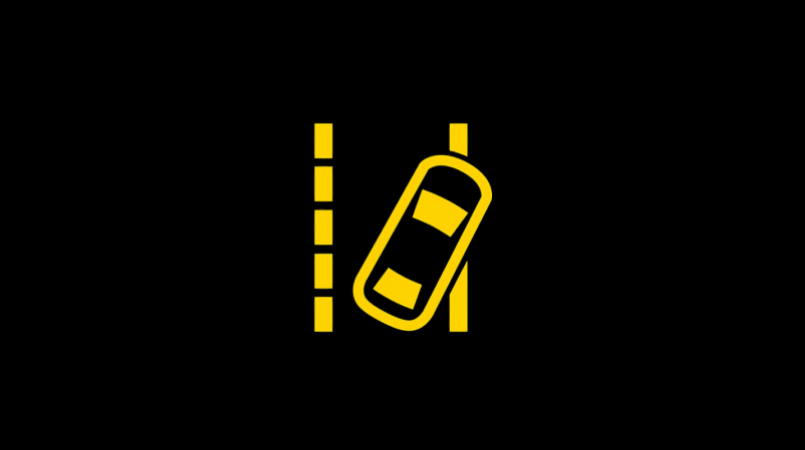
A modern active safety system and, like AEB, one which is fitted to cars from a more recent era, and a tech which goes by several different names too. LDW illuminates if it thinks you’re steering out of your allotted lane without indicating – it might even make a bonging/beeping noise or ‘buzz’ through the steering wheel on top of that. The aim of this is to stop you hitting other cars on the motorway or on dual carriageways through inattentiveness. The evolution of LDW is lane keep assist (LKA), which – if it triggers – will actively try and counter-steer you back into the middle of your lane if needs be. This emblem will likely flash if LDW/LKA is working; if it’s permanently on, you’ve probably switched it off because you find both LDW and LKA annoying and unnatural feeling. If it’s blazing away and you haven’t actively switched it off, then there’s a fault with the system – although this can often be that the forward-facing camera it employs to function is either dirty or misted/frosted over.
Oil Level Warning
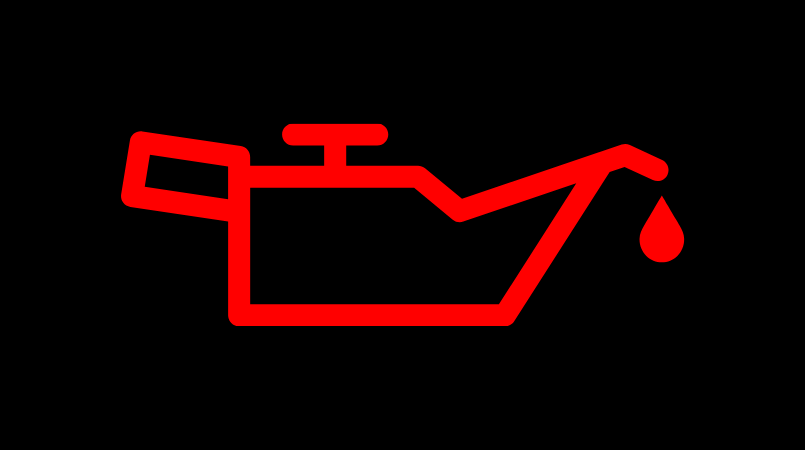
One of two biggies here, but it’s only for cars with an ICE or HEV/PHEV powertrain, not for EVs. This tells you that your car is running low on oil, which is absolutely vital to the correct lubrication of your engine. Not enough oil in the engine equals metal grinding expensively on metal in the vehicle’s internals, which’ll either mean a big repair bill or even, in extreme cases, a complete seizure of the engine. Rectifying the oil light is a case of going to a good motor factors or fuel station and buying a litre or two of the correct grade oil for your particular car – if you’re not sure what grade that might be, it’ll be clearly listed in the owner’s handbook for the vehicle.
Power Steering (Pas) Fault
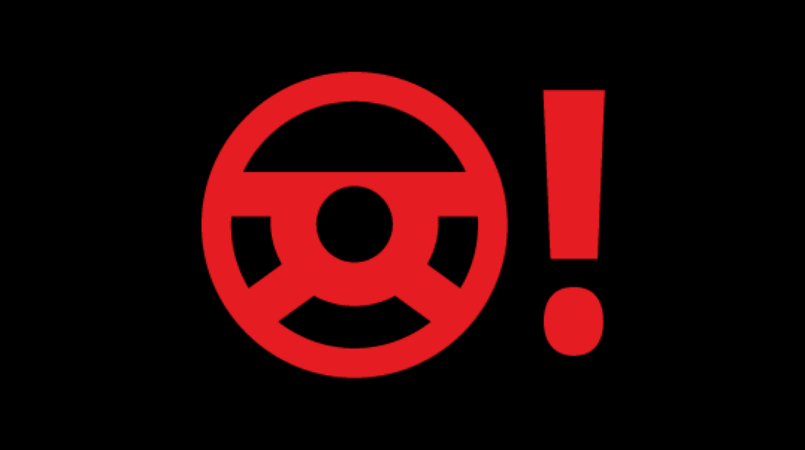
Along with the EML, the brake warning light and the low oil lamp, we would advise you not to ignore this if you see it. This is the power-steering fault light, and it will only ever come on if there’s a problem with the car’s steering system. It’ll usually herald an impending failure of the power-assistance system, so you will still be able to steer the car – but it might become extremely heavy to manoeuvre. On older cars, this light could symbolise that the power-steering fluid (something you can check and top up) was getting down to a low level, but since about 2015 electro-mechanical power steering has become more popular than hydraulic systems, so you’ll need a professional mechanic to check out what the problem with the PAS might be.
Radar Cruise Fault
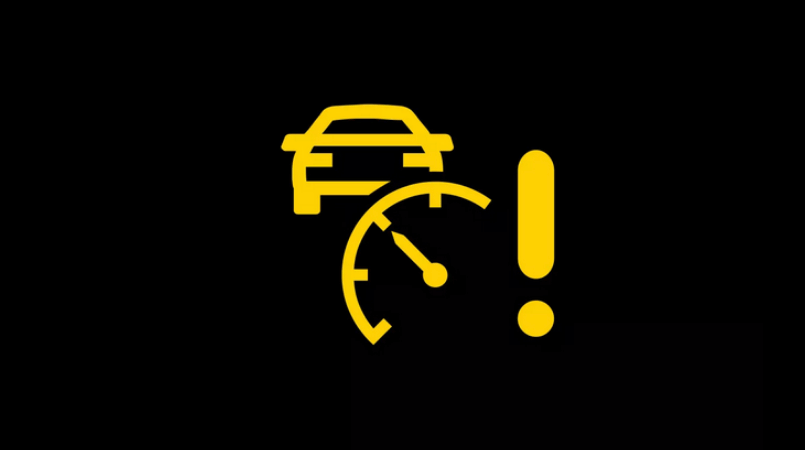
Radar cruise, or Adaptive Cruise Control (ACC), is a lovely toy to have, as it takes the stress out of motorway journeys when it’s working well – it automatically keeps a set distance from the car in front, using sensors, cameras and radar, by adjusting your vehicle’s speed without your interference. If it isn’t working properly, it will mainly revert to regular cruise control (meaning you’ll need to control the distances between your car and other vehicles yourself), or the cruise control simply won’t operate at all. Either way, you’ll want to get this checked out by a mechanic if it stays lit permanently.
Seatbelt Warning
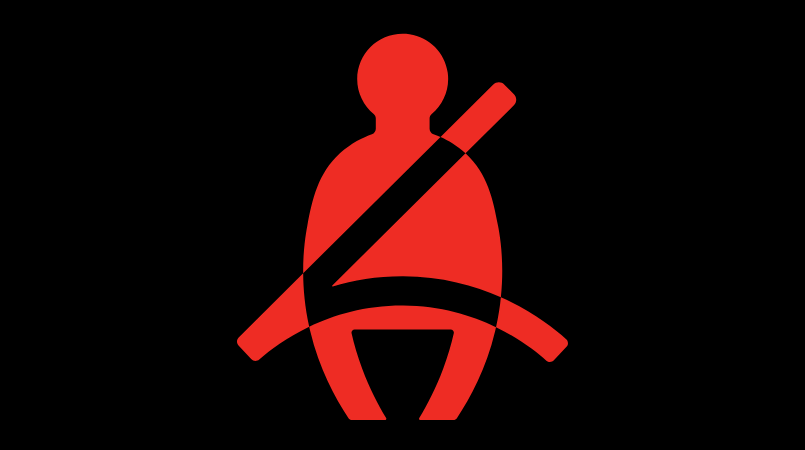
Another very old symbol that, like the low fuel light, should be familiar to you by now – even if you don’t drive yourself. This denotes that someone in the car isn’t wearing their seatbelt, so get them to buckle up. Modern cars often have a graphic refined enough to tell you precisely which passenger hasn’t clunk-clicked their belt into place, as well.
(Orange) Tortoise Of Doom

That’s not its official name, of course, we’ve just gone a bit OTT. But this one is the EV equivalent of the low-fuel warning light, only it’s a much more ‘you’re being silly, now; please stop’ type of warning. On any EV worth its salt, the onboard systems will normally start telling you – usually when the propulsion battery drops to an indicated state-of-charge of 20 per cent – that you’re getting low on energy and that you need to start looking for a convenient charging facility. This will be accompanied by a yellow plug icon, or even what looks like a fuel pump with a little plug trailing off it, somewhere in the instrument cluster. The car will then usually remind you at both 15 and 10 per cent of charge that you’re pushing things, before – when it gets to 5 per cent or lower – this emblem illuminates. It means the EV is now limiting power to both the motors and for the ancillary controls, to try and maximise every last metre of remaining range available to you. Stop and charge your car up, immediately.
Tyre Pressure Monitoring System (Tpms) Warning
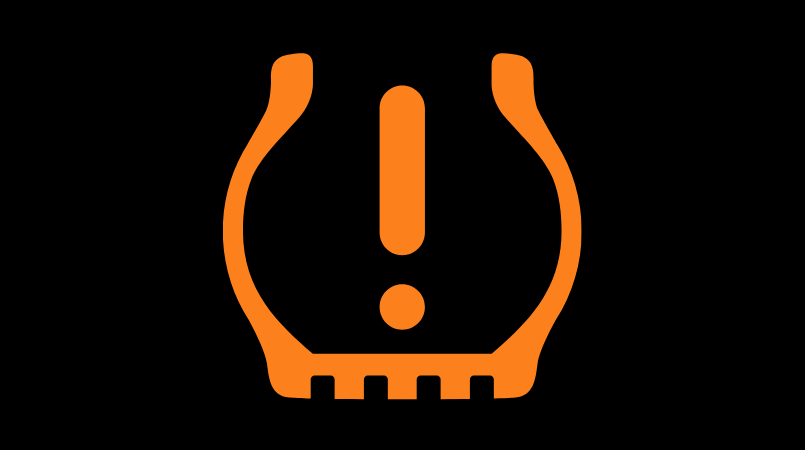
We’ve saved the best until last. Or rather, we’ve saved the most infuriating until last. If you’re familiar with the fable of the boy who cried wolf, welcome – you’re looking square at the technological analogue of that tale. Ostensibly, the TPMS warns of a potentially very serious issue: one, or more, of your tyres is experiencing a significant drop in pressure, perhaps heralding a slow or impending rapid puncture. And that’s obviously not safe, right, so the TPMS is a great guardian? Well, it would be, if it didn’t display so many ‘false positives’. Far too often, the TPMS illuminates in yellow or red, you immediately divert to a garage with an air-supply machine for tyres and find that the pressures on your car’s wheels are all absolutely fine. Grr! Anyway, the problem is that – like the boy in the old legend – you keep listening to the TPMS crying ‘WOLF!’ until you then go and one day roundly ignore it… and that’ll be the one time you actually need to pay heed. So, as infuriating as it can be when the TPMS signals a ‘ghost’ loss of pressure, you still need to watch out for it each and every time it illuminates and respond accordingly.