How to get the best performance from your EV in cold weather
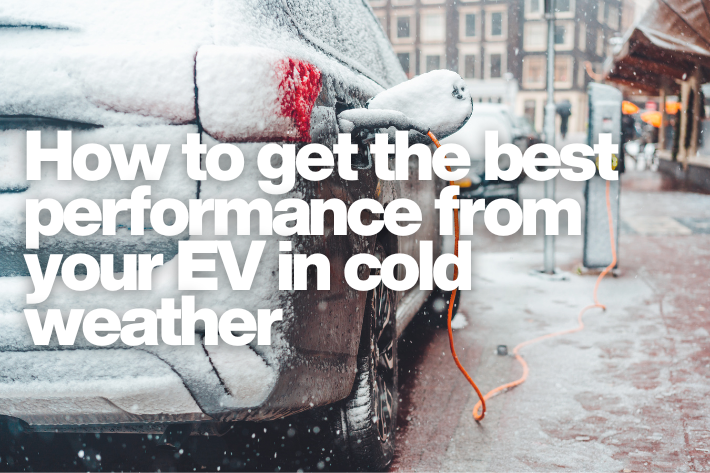
Tips to assist you going the maximum distance in an electric car during winter.
As soon as we’re past December 21, the nights start drawing out again and, once Christmas and New Year’s Eve are out of the way, we can start looking forward to shorter nights and (hopefully) warmer weather.
However, we’re not out of the winter woods just yet, with cold snaps always possible through January and February. And as low temperatures on the thermometer tend to be a killer of an electric vehicle’s (EV) range, it can be a frustrating time for owners as they try to maximise every last kilometre of capability.
Here, then, are some of our top tips to help you go further in your EV when the winter weather bites hard.
Pre-condition it
Many EVs have a neat feature, usually controlled by a companion app on a smartphone, through which you can warm the cabin of the car up before you even step foot in it. Ideally, start this process when the vehicle is still hooked up to the mains via means of a domestic wallbox and you should get into a toasty-warm passenger compartment with the EV still showing 100 per cent battery charge. This isn’t just convenience for convenience’s sake, though, because a big drain on the overall range will come about if you don’t pre-heat the car first and then use its onboard climate control to warm the cabin through. This places more drain on the EV’s electrical systems and will sap kilometres from the distance-to-charge figure on the trip computer. If you have it, and you have a home wallbox too, then pre-conditioning is your biggest range friend.
Deploy a single pedal
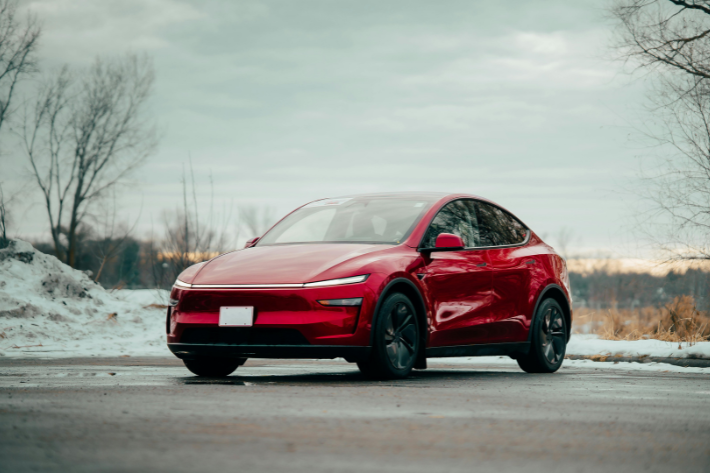
Almost all EVs have one-pedal driving functionality. This means that you can set their regenerative braking (a form of deceleration in which the electric motor switches from working as a propulsion unit into a generator, with the inherent resistance of that system working to slow the car down quickly, rather than the physical brakes grabbing the wheel hubs instead) to a strong enough level that, in town traffic, you shouldn’t have to use the brake pedal at all. You can then control the car’s speed, either increasing or decreasing it, simply using the accelerator. Well-timed lifts of the right-hand pedal should see the EV coming to a stop as required. The bonus is that regenerative braking puts some of the energy created from this form of deceleration back into the car’s battery.
Engage Eco
Another common system in EVs is a selection of drive modes, one of which will likely be called Eco (or something similar, such as Range or Green). It’s a set-up where the climate control’s power is decreased, while the accelerator response also becomes slower – and, in some instances, engaging Eco will also automatically increase the level of regen braking and may even decrease the electric motor’s power output too. All of these characteristics are designed to make the battery charge last longer, so unless you’re on a motorway and you need the full responsiveness of your EV, Eco mode is the one to go for in winter weather.
Pump it up and junk the junk
General fuel-economy tips that apply to combustion-engined cars can be applied to EVs as well. So make sure that all the tyre pressures on your electric machine are at the optimum level, as under-inflated tyres can increase rolling drag and thus increase the motor’s drain on the battery pack. Similarly, needless extra weight in the car (like heavy items in the boot which you don’t need to be transporting around 24/7) and other things like empty roof racks causing extra air drag, will further hurt your EV’s range. Properly pumped tyres and a lighter running mass will help an electric car maximise its range in the cold.
Use heated seats and steering wheel
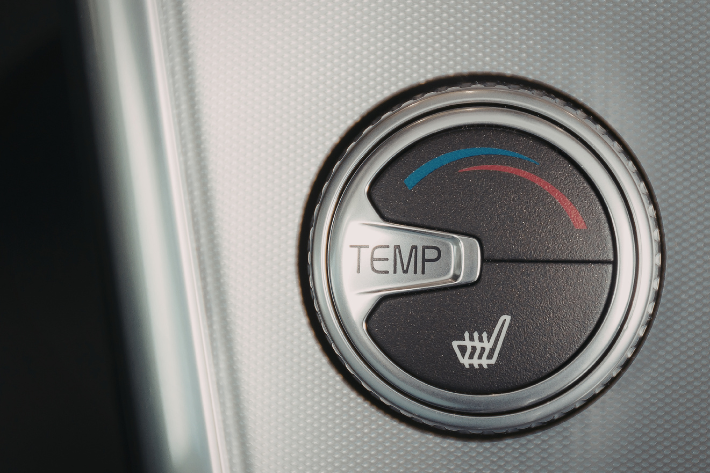
This one is a known trick in EV circles, but it’s not for everyone – and it’s dependent on how high-spec your car is in the first place. But, put simply, even though they use electrical heating elements to function, both heated seats and a heated steering wheel are more efficient to use than the full climate control in the EV. Therefore, if you haven’t pre-conditioned your car before your journey and the interior is cold, it’s better to warm yourself up through the seats and wheel if you want the most range you can get. In essence, this makes sense, because the climate is ‘indiscriminate’ and warms the air in the whole interior, whereas heated seats and steering wheels can be ‘localised’ to the occupants that need them. However, the flipside of this is that while the backs of your thighs, your buttocks and your hands are all warm, the front of your body and legs, and your face, will be in cooler air – hence why this system won’t feel comfortable for everyone.
Take it easy – and prepare
By this one, we don’t just mean pre-conditioning the car. You might know where you’re going on your route but have a look at the state of the traffic on your preferred roads and check it’s not chaos. To be fair, EVs actually like stop-start traffic because there are more regenerative braking cycles and less high-power, high-speed draining periods for the battery, but if you get caught up in congestion and then try to make the time up towards the end of your trip, you’ll use more power and that kills range. While it might seem daft setting the navigation for a journey you’ve done thousands of times, lots of EVs have a subroutine in their mapping which will assess the current traffic conditions and selected the most eco-friendly route, so use that if you can.
And even if you do miss the snarl-ups, then we come back to the ‘take it easy’ part of our tip. As we said above, the more you accelerate and the faster you go in an EV, the more you chip away at your overall range. EVs much prefer steady-state driving in the 50-80km/h zone, rather than battering along at 100km/h-plus, so if you drive smoothly, with lots of anticipation and gentle applications of the accelerator, you’ll go further in cold weather on a single charge than you would do if you’re hammering about the place with doses of full power followed by heavy braking.
Keep your battery topped up, preferably at home
You have to balance the fact that regular charging sessions could shorten a lithium-ion battery’s longevity, with the fact that allowing the car to dip to low battery levels could lead to thermal-management issues as well, and both of these things impact driving range. Therefore, our advice would be to avoid regular DC ‘rapid’ top-ups but instead make sure you’re regularly linking the car to a 7.4kW AC domestic wallbox. That way, you start each day with 100 per cent battery rather than 80 per cent (a quirk of DC top-ups is that EVs slow down their rate of replenishment at 80 per cent, so it’s not worth sticking around on charging units for the last 20 per cent) – which obviously gives you more range – while majoring on AC charging cycles will extend the car’s battery lifespan and therefore keep its maximum range figure higher, for longer. And, actually, that counts just as much in warm weather as it does in the depths of winter.