High-mileage cars: should you buy one?
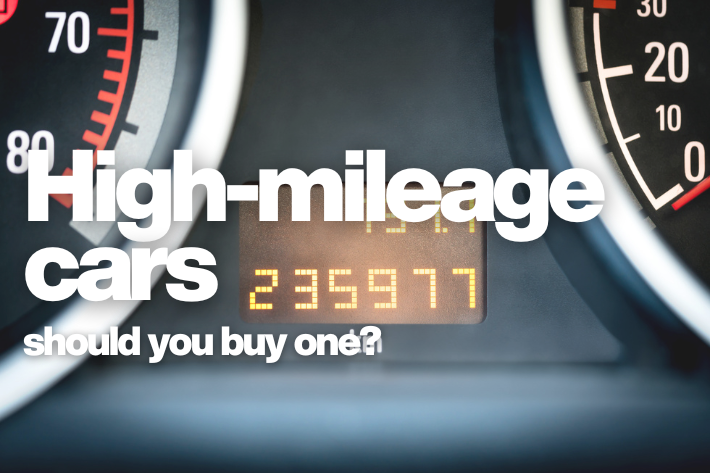
The short answer to the question posed by this article’s title is: absolutely. There’s nothing wrong, and potentially quite a lot right, with a high mileage car. But, of course, there are things you need to consider and think carefully about if you’re looking at buying a car with mega-miles. Here’s what you need to know.
1. How much mileage is too much?
How long’s a piece of string? OK, sorry for the glib answer but the unfortunate fact is that there is no direct, simple answer to this. There are a couple of rules of thumb, though. The average annual mileage in Ireland, according to the Central Statistics Office (CSO) is a fraction under 16,000km. So, if the car you’re looking at has covered more kilometres than that each year it’s been in use, then it technically has above-average mileage.
Of course, if the average is 16,000km then it stands to mathematical reason that there must be many people covering much more than that each year, and many covering much less, so this really is only a rule of thumb. Generally speaking, we’d say that 25,000km per year would be considered high mileage for a car, but that doesn’t mean it’s not a good buy.
2. History is critical
You should buy on condition and history, not on mileage. What’s just as important to check, though, is the car’s service history. In general, a car should be serviced every year, or at roughly 16,000km intervals, so if you’re looking at a car that’s four years old, it should have four stamps in its service book (service records are often digital these days), and preferably four invoices for those services, with details of what work was carried out each time. If a car has a full and complete service history, then the mileage becomes far less significant, because the car has been properly cared for.

3. Should I insist on a main dealer service history?
It’s not a bad idea, but while seeing a whole bunch of main dealer service stamps on a car’s history is a good thing, it’s not the be-all and end-all. If a car, later in its life, has been looked after by a reputable independent garage, especially one that might be a specialist in that particular make of car, then you needn’t worry too much about the fact that they’re not a main dealer — the stamps in the books and the evidence of the work carried out are the important bits.
4. How long do car components last?
In general, most major components will be expected to last for at least 200,000km before needing replacement (aside from ‘consumables’ such as tyres, brake pads and discs, clutches, wiper blades etc). Some car makers reckon that its major components should, with proper servicing and maintenance, last for as much as 350,000km or more.
5. Does it matter where and how the car has been driven?
Yes, it absolutely does. Remember the old Arthur Daley line about ‘one little old lady owner, only drove it to church on Sundays’? That’s the car you want to avoid. The car you want to buy is the car with twice the mileage. Why? Because short, low-temperature journeys are the worst thing possible for a car’s engine, as the oil never gets a proper chance to warm up and work its way around to all parts. Because of that, the wear and tear on an engine is far worse on those short journeys than on a longer run, where the oil has had a chance to come up to temperature and circulate properly. If a car has incredibly low mileage for its age, then that’s actually a car you should possibly strike off your shopping list, as, except in rare cases, it might actually be hiding more wear and tear than a higher mileage model.
There’s another benefit to higher mileage — if the car has been well-kept and properly looked after, then a high mileage car will have had many of its significant wear and tear parts replaced, so they’ll be in newer condition when you start using them. Again, check the service records to see if this is the case.
6. Check the NCT history
Any used car that you’re looking at buying should come with a folder full of service invoices, and — for older cars — NCT reports. Check the NCT reports carefully, as they will give you an idea of what has gone wrong with the car over the years. NCT reports with lots of failures and re-tests are a red flag, as they indicate that the car hasn’t been properly cared for, or worse, the owner has been treating the NCT as their shopping list of the things that have to be fixed for legality, rather than keeping the car properly serviced in the first place.
7. What about the overall condition?
This is also a critical check. Have a really good poke around the interior of any high-miler and check to see what kind of state it’s in. Wear and tear is normal, of course, but if you’re looking at a car with rips in the seats, dirt in the carpets, switches and steering wheel worn smooth and shiny from use, or a knackered and cracked spare wheel in the boot, then it all indicates someone who hasn’t cared properly for the car. Equally, a heavily worn cabin can be an indication that a car has actually covered more kilometres than is claimed, and it may have been ‘clocked.’
8. Is there a green flag I should look for?
Yes, and it’s oil changes. It sounds daft, but if you come across a car with lots of miles which also comes with receipts for lots of oil changes, then you’re probably onto something good. There are recommended intervals from car manufacturers for oil changes, but these are calculated to be at the point where you really need them. If a car has had its oil changed more regularly than that, say once a year at least, then that’s the sign of a fastidious owner and a car that’s potentially in very good mechanical health. It’s not a cure-all, but regular oil changes are the witchcraft of keeping a car’s engine (and gearbox) at the peak of health.
9. Should I pay less for a high-mileage car?
Yes. In spite of everything we’ve pointed out above, the second-hand car market always regards higher mileage cars as being worth less than an equivalent car with lower miles. And that’s why they’re a bargain, as you can argue yourself a decent discount, based on the mileage, and as long as the car’s history and condition are giving you all the good signs, you’re onto a winner.